Showing posts with label year in books. Show all posts

Wednesday, January 05, 2022

Reading in 2021

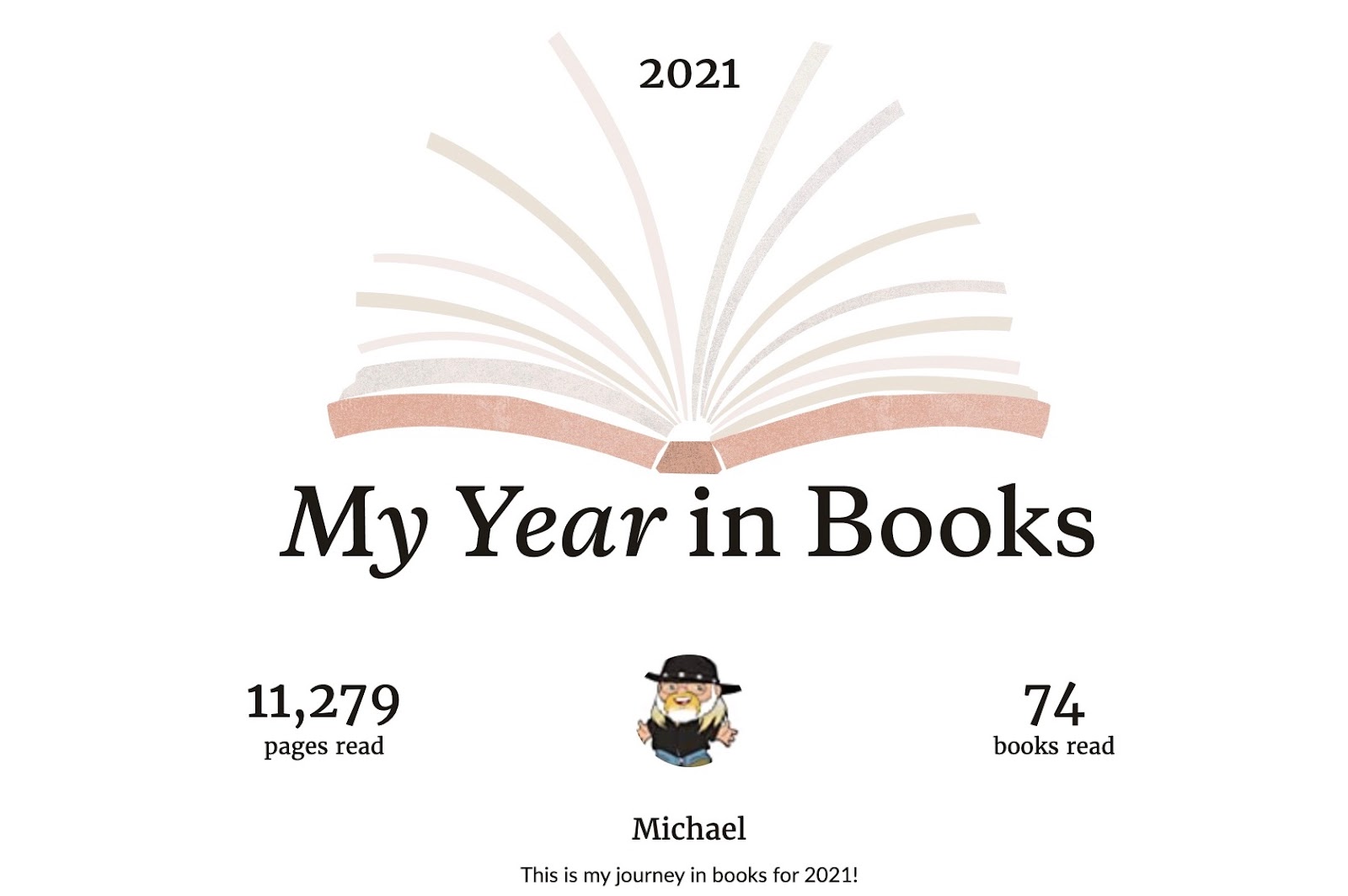
2021 was another good reading year for me. My total number of books read was down from 2020, but still well over my goal of reading 50 books for the year. And I feel like 74 is a more accurate count than my Total Books Read usually is. There are plenty of graphic novels and children's books in there, but not as many short stories and there were only a few books that I started, but didn't finish.

The shortest story I read was "Snow White and Rose Red" by the Brothers Grimm. Normally I'd include that as part of a collection, but I specifically pulled that one out to read because I was getting ready to read Emily Winfield Martin's novel that expands on the tale. I quite liked the fairy tale and loved the novel, but more on that below. 

The longest book I read (listened to on audiobook, actually) was The Moonstone by Wilkie Collins. I loved this one. It's an excellent mystery with lots of twists and turns. One thing that makes it special though is that Collins lays it out as a series of narratives by different characters, each with their own voices and perspectives, which include flaws that they're blind to, but that Collins and his audience aren't.

There's also a lovely romance that I rooted for, but what I adore most is Collins' insistence on shining a loving spotlight on characters that are considered physically unattractive by general society, but are observant and intelligent and crucial. I'm so used to books from this period casting a distrustful eye towards outsiders. And while it's arguable that for most of the story, The Moonstone does that to its South Asian characters who are trying to reclaim the gem that was stolen from them in the beginning, the novel ultimately reveals that it knows better where they're concerned as well. It's a remarkably sensitive, but also intriguing, exciting, and funny book.

The most popular book (among Goodreads users) I read was The Great Gatsby by F Scott Fitzgerald. I liked it okay.  I enjoyed the narrator and, like him, was completely sucked into the horrible world of the Long Island rich. I 'shipped some characters, wanted good things for others, was repulsed by still others, and most importantly was charmed by Gatsby until I got to know him.

The most obscure book I read was William Allen Knight's "The Signs in the Christmas Fire." It's a little book I picked up in a used bookstore in Atlanta on my road trip last Summer. I enjoy Christmas stories, so I bought it without knowing anything about it and really liked it. It's a simple story of an old man and his daughter entertaining and educating fellow travelers around a fireplace at an inn. The pair has a tradition of looking for elements in the fireplace at Christmas time that remind them of the nativity scene. They gladly share these with the room and bring out a lovely lesson in the process.

I tended to like what I read last year, with my average rating being 3.8 out of 5 stars. I did abandon four books, though. 

The prose in Housekeeping by Marilynne Robinson is lovely, but I wasn't in the mood for a meditation on loss and change. The first 50 or so pages cover a lot of time quickly, dialogue is sparse, and events just kind of flow by instead of grabbing me and pulling me in. I wanted something more immersive.

Lalani of the Distant Sea by Erin Entrada Kelly is well-written and beautifully produced with lovely illustrations, but it's darker than I expected or wanted from an island adventure story. The island's culture is positively dystopian and the book's tone is oppressive and heavy. That works for a lot of readers, but it's not my bag.

Sansei and Sensibility by Karen Tei Yamashita is a short story collection in two parts. Her prose is funny and engaging and educational and I enjoyed each individual story I read, but I started to grow tired of them cumulatively. Ironically, the place where I got bored was the back half of the book where Yamashita retells Jane Austen stories with modern, Japanese American characters. That's what I came to this collection for to begin with, but I was way more interested in the first half of the book collecting her own, Austenless work.

I loved the insight to Japanese American culture; it just turns out that I didn't need to have it married to my favorite Regency-period author. I wonder if it has anything to do with Yamashita's admitting that she's not a huge Austen fan herself. Her sister is and that appears to be the inspiration, but I found the Austen adaptations more cute than insightful. They don't have anything particularly new to say about Austen, nor are they as revealing about JA culture as the first half of the collection, so I started skimming them toward the end and then gave up.

The last book I didn't finish was Little Women and Werewolves by Porter Grand. Boy, did that sound fun. One of my favorite kinds of monsters mashed into one of my favorite classic novels. I put it down fairly quickly though. I don't know if it's just that what I like about Little Women (the sweetness and kindness and putting others before yourself) wasn't marrying well with what I like about werewolves (the warning about letting go of social inhibitions). Those themes sound like natural things to put next to each other and maybe Little Women and Werewolves gets there eventually, but the bit I read seemed more interested in building a world where werewolves are an acknowledged, but persecuted element of society. The novel seemed to be about prejudice against them and I got bored with it, but again, maybe I didn't stick with it long enough to get an accurate impression. I wasn't enjoying it though.

I finished The Hidden Staircase, the second Nancy Drew mystery novel, but it was my biggest disappointment of the year.  I loved the first book, so it was especially sad not to like this one so much. Particularly when it's such an iconic story that's been adapted to film multiple times.

I can see why it's a favorite among young readers, though. Nancy investigates a potentially haunted house and it doesn't bother me that Scooby Doo cartoons reused the plot over and over again. And Nancy is as charming as ever. But unlike the first book, her success this time hinges largely on her apparently supernatural ability to talk disloyal henchmen into turning on the main villain. That was hard to swallow and ruined the book for me. I'm curious to see how movie versions handle that.

On the other end of the spectrum, I absolutely loved about a third of the books I read. Some of these were re-reads of favorite holiday stories like A Christmas Carol and various children's books by Wende and Harry Devlin (the Cranberry and Old Witch series, to be specific). Another big influence on that number is my read-through of all seven volumes in Yoshitoki Ōima's A Silent Voice manga series. I loved every single volume as well as the anime based on the story.

The first Nancy Drew novel, The Secret of the Old Clock, was another book I loved. As was Emily Winfield Martin's Snow & Rose. She adds a central mystery that strengthens the ties between the lightly connected events of the Grimm version, but she also gives the girls distinct personalities, forest friends and acquaintances, and dangerous threats to overcome. 

My favorite comic of the year was probably The Kurdles by Robert Goodin. It's about a tossed away teddy bear that enlists the help of some strange forest creatures to help her get home. But before they can assist, they need her aid in dealing with an emergency of their own. Goodin's art is detailed and wondrous and brings the story to incredible life. The little world he's built is amazing and the only negative thing I have to say about it is that there's not a sequel already.

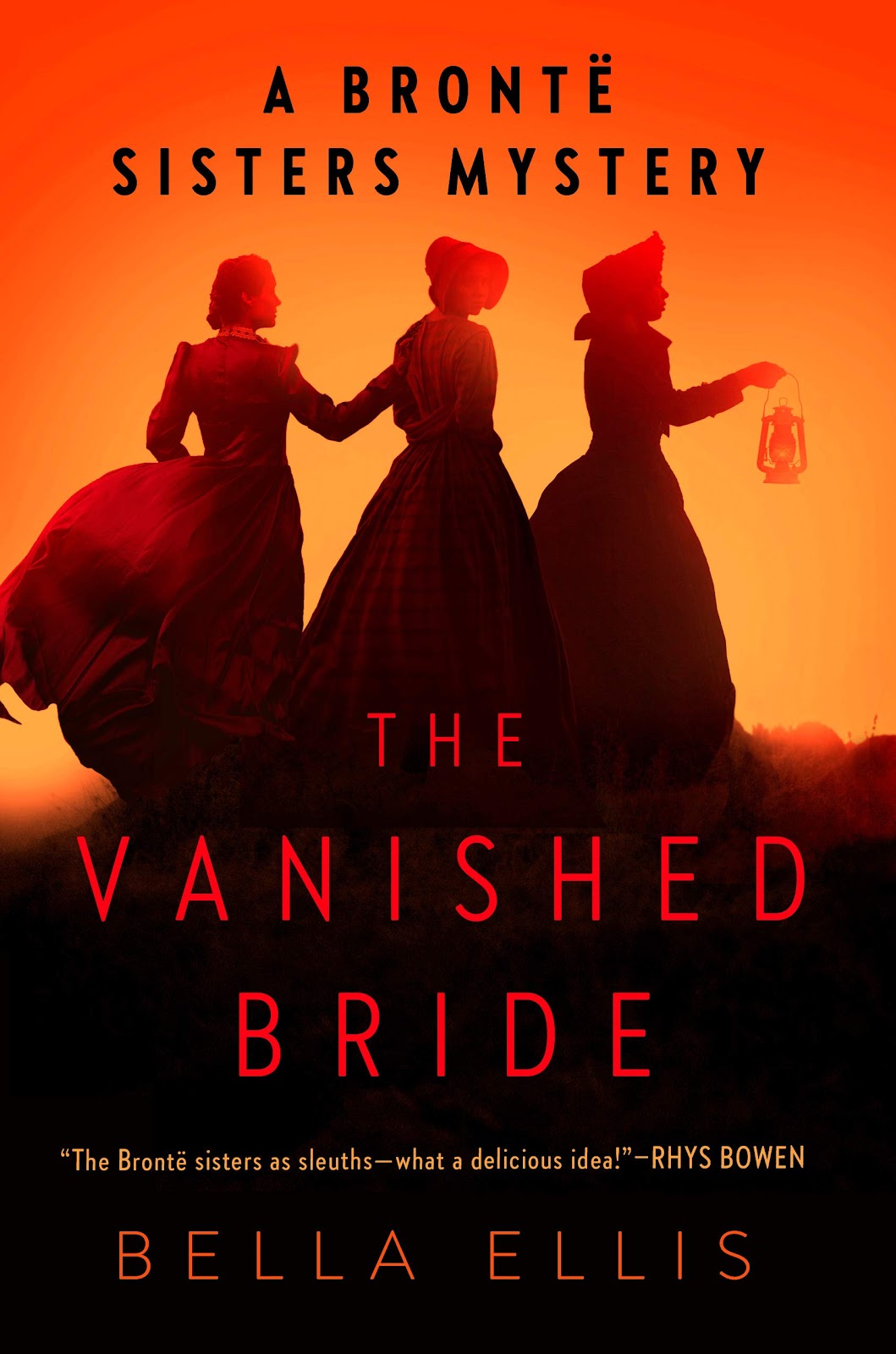
The Moonstone was my favorite novel of the year, but a solid runner up was The Vanished Bride by Bella Ellis. It's a mystery featuring the Brontë sisters as detectives and was exactly what I wanted. The sisters all have the personalities I associate with them (thanks largely to the movie To Walk Invisible) and solve a cool mystery on the moor involving a missing - probably dead - wife and potentially a ghost. And it only strengthened my growing crush on Emily Brontë.

Saturday, January 09, 2021

Reading in 2020: Favorite Fiction

Little Women by Louisa May Alcott
I wrote about Little Women shortly after I read it, so I'll just quote a bit of what I said before:
These are people who are by no means perfect, but are completely dedicated to loving and being kind to each other. They sometimes fail, but their response to that failure is always helpful. That applies to how they respond to their own failings as well as how they confront and ultimately forgive the failings of others.

It's deeply profound and inspirational. [...] There's parenting advice and marriage advice and simple getting-along-with-your-friends advice. But all of it is offered with humility and awareness that the advisor is just as flawed as the advisee. There's not a whiff of self-righteousness in the whole book. [...] And what's also amazing is that every bit of this is as applicable today as it was 150 years ago. Being kind and doing good are timeless exercises and Little Women is here to encourage us.
Halloween and Christmas distracted me from watching all the Little Women adaptations, but I've picked that up again in the new year and will be back to writing about them soon.

The Boatman's Daughter by Andy Davidson
Everything I hoped for: a decaying swamp community run by evil men, a courageous young woman who reaches the limits of her tolerance, an old witch with dark powers and darker secrets, and an honorable, pot-growing dwarf with a family to protect.

Davidson's prose is perfect for his story. He brings the setting to life, creates a ton of sultry atmosphere, and bounces easily between characters to build empathy for the heroes, contempt for the villains, and tension between the two. I just loved it.

The Complete Tales of Winnie-the-Pooh by AA Milne
As lovely as I remembered from childhood. No one writes like Milne and his peaceful, low-stakes Hundred Acre Wood is probably my favorite fantasy world to spend time in.

Untamed Shore by Silvia Moreno-Garcia
An amazing, engrossing, fast-paced thriller about a teenager in 1970s Baja California who's hired as an assistant for a writer, but gets pulled into something dangerous. The suspense aspects are great, but even more than that I just enjoyed spending time with the misfit, film-loving heroine and the oppressively sleepy town where she lives.

Island of the Blue Dolphins by Scott O'Dell
My fifth grade teacher read this to us back in the day - a chapter or two at a time - and it's stuck with me ever since. I've always wanted to go back and revisit it on my own to see if it's as compelling and magical as I remembered. It is.

It's a survival story, but it's also a story about isolation and culture and animals and people and hope and it's just a beautiful, beautiful thing. Someone reminded me that O'Dell actually wrote a sequel, so that's gone on my reading list, too.

Between Worlds: Folktales of Britain and Ireland by Kevin Crossley-Holland
Crossley-Holland takes traditional folktales and retells them in a modern voice. Sometimes that means updating dialects to something more readable, but sometimes it means tweaking plots or even picking a different point of view to tell the story from. Regardless of how much he adjusts, the end results are always brisk, exciting, and immersive. And I love how he divides the collection into sections, so the faerie stories are together, as are the romances, the trickster tales, and the ghosts. Super impressive.

The House with Chicken Legs by Sophie Anderson
A beautiful book. Not just an adventure about a girl in training under Baba Yaga, but a lovely story about growing up. It's heartbreaking at times; it's also profoundly gentle and encouraging. Marinka fights against expectations that she never signed up for, but the novel refuses to portray the struggle in terms of one right answer and one wrong answer. Instead, it has the grace to allow Marinka to figure out her place and her purpose while also considering the needs of others.

Leave It to Psmith by PG Wodehouse
I've never read another of Wodehouse's Psmith books, so it's unusual that I'd let myself start with the fourth book in that series. But this is also a sequel to Something Fresh, which I loved. Something Fresh introduces the inhabitants and shenanigans of Blandings Castle and had a bunch of people competing to obtain a valuable object, while also featuring a lovely romance. Leave It to Psmith repeats the formula with enough difference to keep it from feeling repetitive. And of course the real draw is Wodehouse's prose itself, which is light and hilarious.

My problem now is deciding whether to read the next Blandings book (a collection of short stories called Blandings Castle) or go back and start the beginning of Psmith's adventures with Mike and Psmith.

Friday, January 08, 2021

Reading in 2020: Favorite Non-Fiction

I don't typically read a lot of non-fiction, just because there are so many novels I want to get to and so little time to get to them. But 2020 was a year for introspection and I found myself peppering in books that I thought would be useful to me in some way. Usefulness takes a lot of different forms, but these are the books that I found most educational, encouraging, and occasionally life-changing.

How to Be an Antiracist by Ibram X Kendi
This was so extremely helpful. Kendi clearly defines terms in ways that make them useful so that not only do we know what we're talking about, but we also have a better sense of what actions to take to fix it. So much of the discussion about racism has been clouded by vague descriptions like "not racist," "institutional racism," and "microaggressions." Kendi sweeps that away and offers a simple, understandable vocabulary for the purpose of getting things done. And he does this all with humility as he chronicles his own journey through various racist ideas to arrive at the point he has.

I love his insistence that it's not helpful to simply label people as either racist or anti-racist. Ideas can be racist or anti-racist. Policies can. But people - all of us - act in racist or anti-racist ways and we often flip between the two. The call is to be more purposeful about maximizing our anti-racist actions and using what power we have to change racist ideas and policies.

Mere Christianity by CS Lewis
Lewis sets out to simplify Christianity to its most basic claims and he does exactly that. He uses clear, effective analogies and a lot of humor to demonstrate that the teachings of Jesus Christ are as uncomplicated to understand as they are demanding (and rewarding) to follow. I found it amazingly encouraging as well as challenging.

Growing With: Every Parent's Guide to Helping Teenagers and Young Adults Thrive in Their Faith, Family, and Future by Kara Powell and Steven Argue
With David moving away to college last year, I wanted some help navigating the necessary changes in Diane and my relationship with him. My tendency has often been to jump in to do things for him before he had a chance to try for himself. It's never been a great strategy, so with that becoming physically impossible, it seemed like a good opportunity to curb the impulse. But what to replace it with?

Powell and Argue offer plenty of practical suggestions for parenting children in their late teens and twenties, but for me the biggest help is just their perspective on maintaining relationships and having that be the biggest priority. They help me see that David is moving out of a period of his life where he's mostly just absorbing knowledge. He's now entering a season where he's exploring his options and will ultimately focus on a vocation. As he makes these transitions, Powell and Argue challenge me to step back and let him do more on his own while also reaffirming my instinct to keep the relationship warm and open.

Jesus Feminist: An Invitation to Revisit the Bible's View of Women by Sarah Bessey
In the midst of reading Jesus Feminist, I thought it was probably going to be a book that I like a lot, but not one of my favorites of the year. While it's an excellent introduction to the idea that feminism and Christianity are not only compatible, but inseparable, there are other, deeper books that dig into the relevant Biblical texts. Philip B Payne's Man and Woman, One in Christ was especially helpful to me, for example. So while I appreciated and agreed with Bessey from her opening chapters, she wasn't really presenting anything I hadn't read or thought about before.

But reflecting on the book, she presents her thoughts with such passion and humility and confidence that I end up loving it just for her spirit. And for the encouragement to put these ideas into practice more than I have.

Thursday, January 07, 2021

Reading in 2020: Favorite Comics and Children's Books

2020 was a good reading year for me. I was already making reading a bigger priority heading into the year from 2019, but then not being able to go out much translated directly into more time with books. I'd set a goal of 52 books for the year and almost doubled that with 103.

As usual, though, tracking my reading through Goodreads leads to some misleading data. If I decide not to finish something (like the 642-page The Historian) Goodreads still counts all the pages as if I've read the whole thing. And my total count includes short stories, children's books, graphic novels, and comics collections, which are all pretty quick to complete.

Still, I love looking at the stats, like how the most popular book I read last year was Little Women (also shelved by 2.6 million other Goodreads users) and the least-popular was the graphic novel The Brontes: Infernal Angria (read by only 9 other users).

My average rating of all my books was 3.9 out of 5 stars, so I enjoyed most of what I read. Obviously I'm not going to list everything I read here, but I do think I'll talk about my favorites of the year, starting with comics and children's books today, then get into non-fiction and novels over the next couple of days.

I did a better job in 2020 than I usually do reading stuff that came out that year, but a lot of these will be older than that.

COMICS

Ghost Tree by Bobby Curnow and Simon Gane
Ghost Tree is a beautiful ghost story, but while the ghosts are real and there's a tense moment or two, the emphasis isn't on horror, but the ghosts as metaphor. The main character is a young man named Brandt who's returning to Japan partially to fulfill an old promise to his deceased grandfather, but also to escape the stress of his failing marriage and to try to figure out what he's going to do next.

I may not be going through the same issues that Brandt is, but I related to his desire to hold onto the past as a way of escaping his responsibilities in the present. I liked the guy and hurt for him and rooted for him to figure things out. And I think the ending is perfect.

Five Years by Terry Moore
I became a full-fledged Terry Moore fan with Rachel Rising in 2019. I'd tried his first huge series, Strangers in Paradise, a long time ago and decided it wasn't for me, but I enjoyed Motor Girl and then Rachel Rising just pushed all my buttons. It's a great story, but what I really fell in love with was Moore's art: his ability to differentiate characters (not as easy as it sounds), let pictures do the hard storytelling work, and draw literally anything well.

Five Years aims to pull Moore's various series together into one story, which is incredible considering the diversity of genres he's worked in. I just wanted more of the Rachel Rising characters and planned to be easy to please, but finished Five Years flabbergasted at how seamlessly Moore combines characters and plots from romance, science fiction, and horror comics.

It's so strong that I'm not only going to check out Echo (the one Moore series I haven't yet tried), but I'm also going to give Strangers in Paradise another look.

The Graveyard Book by Neil Gaiman, P Craig Russell, and Others
I haven't read Gaiman's novel yet, but now I want to more than ever. I love the structure of each chapter being more of less self-contained, but with a subplot that works through each story and pulls them together. I don't know how much Russell was in charge of collecting the various artists who visually depict each chapter, but it's a Who's Who of fantasy and horror virtuosos. The art is lovely.

If I had one complaint, it was that the individual artists appear to be repressing their own, unique styles in favor of a unified look. Maybe it's just me. Maybe it's just the color palette that makes it all so consistent and I'm imagining the rest. But Kevin Nowlan, Tony Harris, Scott Hampton, and Jill Thompson have very different styles and I'd love to see that emphasized more. That bothered me less and less as I kept reading though to the wonderful, touching conclusion to the story.

CHILDREN'S BOOKS

Cranberry Thanksgiving by Wende and Harry Devlin
This was a holiday tradition growing up and it's impossible to separate the book from the great memories I have around it: especially my mom reading it to us and baking the cranberry bread recipe that's included (and is also a crucial part of the story). Nostalgia aside though, the illustrations are unquestionably beautiful and evocative and I love the message about not judging people by appearances.

Old Black Witch! by Wende and Harry Devlin
Between Cranberry Thanksgiving and a book called Old Witch and the Polka-Dot Ribbon, the Devlins' books were a huge part of the holidays for my family when I was a kid. Like I said above, I have a deep, nostalgic connection with the art and also with the stories that combine dark(ish) outsider characters and vibes with the coziness of fireplaces, plaid tablecloths, and warm baked goods. Each book also includes a recipe for an item mentioned in the story, and my mom made regular use of those. So these books also bring back great memories of smells and tastes.

Old Witch and the Polka-Dot Ribbon was the second in the Old Witch series and we didn't have the first one, Old Black Witch, in our library for some reason. But I've read it since at some point and decided to finally get my own copy this past Halloween season. The art is as lovely as I remember and I still have a strong connection with the theme of different kinds of people living and working together, with kindness, understanding, and good manners winning the day.

Thanksgiving in the Woods by Phyllis Alsdurf and Jenny Lovlie
I bought this book in 2019 at a book fair, just because I loved the art and the feelings of comfort and camaraderie that it evokes. It's based on an actual Thanksgiving tradition of a large, extended family in New England and while I personally hate eating outside, I'd do it for the celebration described in Thanksgiving in the Woods. It's lovingly written with gorgeous illustrations that make me wish I was there.

Thursday, January 02, 2020

Reading in 2019


I had a good reading year in 2019. I've been participating in the Goodreads Reading Challenge for the last few years and set myself a goal of 40 books this time. My goal has been steadily increasing each year, but 40 was still under the number of books I actually read in 2018. I thought maybe I'd hit 50 or so again. I read 102.

That's a hard number for me to believe, even counting that a lot of those were graphic novels and short stories and audio books and a couple of novels that I abandoned because I wasn't enjoying them. I have no illusions about doing that number again next year, but I do plan to continuing making reading a priority.

Goodreads provides cool, end-of-the-year stats and estimates that I read 20,017 pages last year. The shortest book was HG Wells' short story "The Flowering of the Strange Orchid," which is only 10 pages long. The longest book was Dante Alighieri's The Divine Comedy. But that's where I see a hole in Goodread's system. I didn't actually finish all 798 pages of The Divine Comedy. I marked it Read, because I didn't intend to come back to it and Goodreads doesn't have a separate category for Did Not Finish. I didn't give up on many books last year, so 102 is still largely stuff that I actually read, but Goodread's estimation that my average book length was 196 pages is undoubtedly off.

The most popular book I read last year was Frankenstein by Mary Shelley with 1.2 million people recording it as well. I suspect that Dracula would be up there too, but I logged the annotated edition that I have, which would have less readers than whatever Goodreads' main entry for Dracula is.

The highest rated book on Goodreads that I logged was The Name of the Wind by Patrick Rothfuss, another book I didn't finish. (And another monster-sized novel, further skewing my page count.) I was listening to it on audio book and didn't like the reader, so I gave that up. I do intend to come back to it in actual book form one of these days. In addition to hearing great things from a couple of trusted sources, Goodread users give it an average of 4.22 stars.

Rather than listing out all 102 books, I'll just mention some of my favorites from various categories: novels, short stories/children's books, and graphic novels:

NOVELS

Frankenstein by Mary Shelley


This was a re-read for an episode of Filthy Horrors. Actually, I listened to Dan Stevens read it on audiobook, which I highly recommend.

As always, Victor Frankenstein is an infuriating, but believable personification of privilege and moral weakness. His Creature is an icon of loneliness and despair born of rejection. Shelley's novel is a beautifully horrible story about the harm that we do others when we push them aside and it is still extremely relevant.

Joyland by Stephen King


I sometimes forget how great King is. He's earned a reputation as a wordy writer, but even his longer books are immersive and compelling. When he's tighter on the story - like he is in the less-than-300-page Joyland, he's magical. King is always strong on grounding horror in relatable characters and situations and that's true in this story of losing a first love, working a memorable summer job at a beach-side amusement park, and finding the serial killer responsible for putting an actual ghost in a haunted house.

Relic by Douglas Preston and Lincoln Child


This was my second time reading Relic, because I'd like to continue the Pendergast books, but it had been long enough since reading the first one that I wanted to re-familiarize myself. It's as propulsively thrilling as I remembered. Cool characters in a cool setting where unexplained, gruesome deaths are occurring. It's a great mystery that turns into a suspenseful horror story.

The Sherlockian by Graham Moore


Moore has written a really fun mystery that unfolds in two different time periods. A Sherlock Holmes expert turns up dead in a hotel room after claiming to have found a missing journal of Arthur Conan Doyle. While a fellow expert tries to solve that murder, the novel flashes back to the time of the missing journal when Conan Doyle is trying to solve a different group of murders. And in addition to the two cases is the mystery of how they might be connected.

Moore's prose and characters keep the story moving and both time periods are equally captivating. I felt for the titular Sherlockian investigating the case in the present. He's super smart, but also lonely and I got invested in seeing how/if his relationship would develop with the journalist who asks to tag along on the investigation.

Even more, I loved the characterization of Conan Doyle as a talented writer who's desperate to escape the shadow of his greatest creation, in part by proving that Conan Doyle himself is the actual detective. Partnering him up with his real-life friend Bram Stoker was a genius move and I want a whole series of novels by Moore with Conan Doyle and Stoker solving crimes in Victorian Britain. At the very least, it got me wanting to know more about Stoker who comes across in this novel as a real stand-up guy.

The Sweetness at the Bottom of the Pie by Alan Bradley


A lovely book about a precocious 11-year-old girl who's growing up in the English countryside in the mid-20th Century and also solves a murder. The first of many, apparently, and I'm not sure why I'm only just now hearing about them. Flavia de Luce is completely charming and the novel never cheats to help her put together clues or bring the villain to justice. I'm eager for more.

Dracula by Bram Stoker


This was another re-read for Filthy Horrors. The first time I read it, however many years ago, I read my annotated edition, which wasn't the best way to dive in. I got lost in the notes. They're enlightening, but they also disrupt the story if you keep reading them as you go. This time, I was just about the story and I enjoyed it even more.

Two highlights: First, it's a feminist work. After reading about Stoker as a fictionalized character in The Sherlockian and then reading Dracula again, I'm fascinated by him. Mina Murray Harker is (by Van Helsing's own admission) the smartest of the hunters, but she's sidelined by the well-meaning men of her group who want to protect her. And as long as that's the case, Dracula succeeds in his schemes. It's not until Mina is brought back into the party that they start to make headway against the Count. This isn't subtext. Stoker underlines it, circles it, and draws big red arrows pointing at it.

My other big take-away this time is how the epistolary (essentially "found footage") approach of the novel forces readers to put pieces together for themselves. It's not hard work and Stoker explains enough that you're never in danger of losing the whole story, but there are all of these little revelatory moments where I went, "Oh, that's what that was about!" I love that.

Dracul by Dacre Stoker and JD Barker


I very much enjoyed this prequel to Dracula co-written by a relative of Bram Stoker, but I did have an issue with its using Stoker's epistolary format. Stoker made great use of it in Dracula, but it's not needed in Dracul and the book isn't convincing about why someone is recording all of this live.

That said, Dracul is super engaging. Bram Stoker and his siblings are characters in the story and great ones. I also loved the question about Bram's real-life childhood illness and the fantastical speculation about what may have cured it. That's a wonderful springboard into mystery and adventure.

Best of all, though, the book is scary with chilling scenes and images that haunted me for a while after I put it down.

SHORT STORIES, CHILDREN'S BOOKS, AND POETRY

Mary, Who Wrote Frankenstein by Linda Bailey and Júlia Sardà


This is a lovely biography of Mary Shelley written for children and with absolutely captivating illustrations. But more than that, it's encouragement for young writers - especially girls - to find and tell the stories within themselves.

"The Mysterious Key and What It Opened" by Louisa May Alcott


Without even thinking about a new Little Women film coming out at Christmas, last year I explored some of Alcott's pulpy genre stuff (the kind of stuff that Jo March is writing at the beginning of Gerwig's movie). "The Mysterious Key and What It Opened" was my favorite. It begins with a shocking mystery that - as the story progresses - looks to have a familiar solution, but then dodges at the end to not only surprise me, but move me emotionally. Between this and the new movie, I'm adding Little Women to my reading list for 2020.

"Stopping by Woods on a Snowy Evening" by Robert Frost; illustrated by Susan Jeffers


I try to read this every winter, usually around Christmas, because it's probably my favorite poem. I especially love the edition with illustrations by Susan Jeffers. She adds a purpose to the narrator's forest visit that isn't exactly necessary to the poem, but is nonetheless lovely.

Christmas: Penhaligon's Scented Treasury of Verse and Prose edited by Sheila Pickles


In her Introduction, Pickles describes the value of this collection of essays and story excerpts as helping her keep Christmas in context. I'd forgotten that as I read, but recalled it as I felt the same effect working on me. It's so easy to let the holiday get out of control and these writings (mostly from the 19th Century) either describe very simple, but joyful holidays or communicate thoughts about Christmas that grounded me in its meaning. This will be an annual reading from now on.

GRAPHIC NOVELS

Lady S, Vol. 1: Here's to Suzie! by Jean Van Hamme and Philippe Aymond


An amazing spy story; gorgeously drawn with exquisite detail. There are twists and turns and jumps in time, but the story never confuses. Most importantly, I love the main character. I'm extremely eager to dive into Volume 2.

Blacksad by Juan Díaz Canales and Juanjo Guarnido


Brilliant, hard-boiled mysteries with anthropomorphic animal characters. The art is expressive, detailed, and beautiful. The mysteries are complex and full of memorable characters.

The first mystery, "Somewhere Within the Shadows," is a fairly standard noir-type murder investigation, but the following two, "Arctic Nation" and "Red Soul," get into serious issues like racism and McCarthy-esque scare tactics. Both were big problems in the '40s setting of the comic, but are also sadly troubles that persist today.

Prez by Mark Russell and Ben Caldwell


I'm a big fan of Ben Caldwell's art, so that was the initial draw for me. But I also appreciated the idea of using the goofy teen-President concept from old DC comics as a way to comment on current social trends and politics. The result is quite insightful and - super important for satire, but often overlooked by would-be satirists - funny. More than that, I very much relate to the main character Beth Ross and her struggle to find and follow the morally right course of action in a culture that doesn't often reward that. Prez doesn't offer any simple answers to the questions it raises; it's honest about how complicated things have become. But Beth is an inspiration to continue trying to do the right thing even when it doesn't seem practical or even possible.

Sadly, the series was cancelled after this volume. I'd love to read and learn more.

Rachel Rising by Terry Moore


Rachel Rising is possibly my favorite thing I read this year. I've always loved Terry Moore's elegant, black-and-white drawings with their super expressive characters, but I had a hard time getting into the story of his most iconic work, Strangers in Paradise. Rachel Rising has a horror hook that worked better for me: a woman who wakes up in a shallow grave with no memory of how she got there. As she investigates, the story gets into witchcraft, demons, flashbacks to 17th Century New England, and an adorable little girl who also happens to be a serial killer.

Jonah Hex, Vol. 1: Face Full of Violence by Jimmy Palmiotti, Justin Gray, Luke Ross, and Tony DeZuniga


Luke Ross is the artist for five of the six stories collected here and his art looks great. He leans toward realism and I love how his Jonah Hex looks like a horribly disfigured, young Clint Eastwood. Seems appropriate for the character without being distracting.

Jonah Hex' co-creator Tony DeZuniga draws the other issue and his scratchier, grittier style is also very cool. I haven't checked, but I hope he came back for other issues in the series.

What surprised me most about the collection is that each issue is a self-contained adventure. That's a style of comic that we don't see enough of anymore and it's especially welcome when each story is as powerful as these are. They occasionally build off Western tropes, but always with a focus on character and building tension. I finally "get" Jonah Hex and can't wait to read more.

Fables: Book One by Bill Willingham, Mark Buckingham, and Lan Medina


This is a re-read because I want to finally finish the series. I fell behind at some point when these were coming out as single issues, but I love these characters (especially Snow White and Bigby Wolf, but all of them) and using a variety of genres to tell their stories is genius.

The first volume starts with a cool murder mystery, but even more than that, I love the political allegory of the second story, a la Orwell's Animal Farm, which just so happens to take place at the remote farm where the talking animals and other non-human Fables have to live. I didn't realize how much I needed to see a story about Shere Khan hunting Snow White with Reynard the Fox running interference.

Marvel Masterworks: The Amazing Spider-Man by Stan Lee, Steve Ditko, and John Romita


I really dug into classic Spider-Man last year and read several of the Masterworks collections, getting up into the John Romita years with the introduction of Gwen Stacy and Mary Jane Watson. The melodrama can be much, especially during the volatile relationship between Peter Parker and Betty Brant (which could not end quickly enough for me). And I was surprised by how much I disliked Aunt May's presence in Peter's life. The series leaned hard on her frailty and excessive emotional reliance on Peter as a source of his angst and constant worry.

I was also surprised (but enjoyed) that Peter met Gwen and Mary Jane at about the same time. I always imagined that he began and finished his relationship with Gwen before MJ entered the picture. Instead, he meets them both, they're both clearly attracted to him - and vice versa - but Gwen starts to feel more serious about it first. There are hints that MJ is more interested in Peter than just flirting, but she keeps that to herself until it's too late. I loved all that stuff as well as the introductions of so many classic villains and of course J Jonah Jameson being J Jonah Jameson all over everything.

Little Book Of Horror: Dracula by Steve Niles and Richard Sala


Dracula as a children's book. It's a fun, adventurous take. Niles' text is entertaining and funny, while Sala's illustrations are gloriously gothic, sexy, and funny themselves.

All-Action Classics Dracula by Michael Mucci and Ben Caldwell


Possibly my favorite version of the story, including Stoker's. That's maybe going too far, but it reminds me of how I feel about Peter Jackson's Lord of the Rings vs Tolkien's. Michael Mucci and Ben Caldwell keep the story and characters of the original intact while making a few, carefully considered changes to help illuminate some things or keep the story moving.

It loses the puzzle-solving that the epistolary nature of the novel forces on the reader, and that's something I miss, so I'm glad to have the story in both formats. This is the perfect introduction to Dracula for anyone interested in the story, but intimidated by what they've heard about the novel.

Koma by Pierre Wazem and Frederik Peeters


I love this series more the deeper I get into it. I'm pretty sure that I've re-categorized its genre with each volume, too. It felt like horror at first, then fantasy, and with the third volume (as far as I've got, currently) it's science fiction. The tone and setting haven't changed, just the way I've perceived them because of the emerging plot. It's a cool world with an amazing look and a fascinating story that I'm still figuring out as I go.

The Bloody Cardinal by Richard Sala


And finally, Richard Sala is always awesome and The Bloody Cardinal is yet another example of his aesthetic and my tastes creating a ven diagram that's just a circle. It's the story of a series of murders that may or may not be the work of a masked killer who's been presumed dead. Various concerned parties on both sides of the law investigate and the bodies keep piling up. As always with Sala, it's funny, scary, and sexy all at once.
Friday, January 11, 2019

22 Novels I Read Last Year

Here are all the novels I finished last year, from least favorite to most (more or less).

The Arizona Clan by Zane Grey


I picked this up when we visited Arizona a couple of years ago, because it takes place in an area where we spent a lot of time, but I just now got around to reading it.

Grey is a legendary writer, but this is a lesser work filled with paper-thin characters, hokey dialogue, and an uninspired plot about warring families and the drifter who gets caught between them because of a pretty girl.

The landscape descriptions are nice though and make me want to go back and visit Arizona again.

The Complete Adventures Of Senorita Scorpion, Volume 1 by Les Savage Jr


I was fully on board with a series of stories about a female, masked Western hero, but that's not what these are. Señorita Scorpion grows into an heroic character, but it takes a few stories for her to get there and she never does throw on a mask.

In the first tale, "Señorita Scorpion," we meet her through the eyes of a typical, male Western hero named Chisos Owens. He's not unlikable, but he's not compelling either and he's certainly not what I signed up for when I started the book. But Señorita Scorpion (better known in the stories by her actual name, Elgera Douglas) is a cool, mysterious character and I looked forward to getting to know her better in the sequel stories.

Sadly, she's used terribly in "The Brand of Señorita Scorpion," which has her as a helpless damsel in distress for Owens to rescue and help. Totally skippable.

"Secret of Santiago" is better and starts to let Douglas play a role in her own fate, but is still giving equal time to Owens and a new character, sheriff Johnny Hagar. The lawman is introduced to create a romantic triangle, which still makes this Owens' story with Douglas as the prize and Hagar as the obstacle. But Douglas does get to participate more in the action, so it's an improvement.

My favorite of the collection is "The Curse of Montezuma," partly because it's the most pulpy with its cult of Aztec revivalists who operate from a hidden city and exert mind control over their enemies. But mostly I love that it takes Owens out of the story early and lets Douglas actually become the hero, protecting her interests, taking revenge for the suffering of her loved ones, and ultimately saving the day for several people. I'd given up on the idea of Volume 2 until I got to this story, but finished it interested in continuing. If the rest are closer to this, I'd like to read them.

She: A History of Adventure by H Rider Haggard


It started a genre - or at least a popular trope within the genre - but the seminal Jungle Queen/Lost City story is long on description and philosophy and short on convincing characterization. It begins as a generational revenge adventure and ends up being about a couple of sad guys with inexplicable Stockholm syndrome.

Seed Seeker by Pamela Sargent


I didn't realize that this was the third in a trilogy until I was almost done with it. And to the story's credit, I don't know that I ever would have known had I not gotten curious about the author and gone looking for more information. Since the trilogy is a generational saga, Seed Seeker stands well on its own.

I may go back and read the other two novels as prequels, but not right away. I enjoyed Seed Seeker, but it's not what I was hoping for from it's description of a young woman traveling upriver, looking for answers from a mysterious and closed off civilization. I was looking for a riff on Heart of Darkness, but Seed Seeker is interested in other things. That's not the book's fault, but I'm still adjusting. If it stays with me for a while, I'll want to check out the first two.

I quite liked the theological questions Seed Seeker raises with its metaphor of a colonizing spaceship as God. And I liked its answers just as much. It's a compelling read, because I wondered right alongside the characters what Ship was up to and how it would judge the colonists it left behind. And I wondered what that would reveal about Sargent's worldview. That was all pretty great, but I never fell in love with any of the characters and was ultimately lukewarm on the book.

The Master of Ballantrae by Robert Louis Stevenson


I know that Stevenson liked to work in different genres, but the 1953 Errol Flynn adaptation of this novel had me expecting (and frankly, hoping for) another Treasure Island-esque swashbuckler. Instead, The Master of Ballantrae is part psychological thriller and part Shakespearean tragedy. It's exciting and gripping, but not in the way I expected and the experience was disrupted by my constant waiting for the adventure to kick in. It's on me that I didn't enjoy it as much I might have.

Herland by Charlotte Perkins Gilman


One of the challenges of writing utopian fantasies is creating sufficient drama to propel a story. Perkins Gilman does it by telling her story from the point of view of three men who've discovered a perfect society made up entirely of women and girls. Each man has his own way of relating to women in his world: one worships them, one wants to possess them, and one (the narrator) is more detached and scientifically curious.

But even though there's tension in how the men relate to this civilization and how they may impact it, Perkins Gilman is more interested in fleshing out the culture and thinking through what a perfect, female society would look like. The book is super light on plot (and not too strong on characterization, either), but it presents some fascinating, provocative ideas.

The Ghost Writer by John Harwood


Very atmospheric, modern, gothic literature. I was pulled along by its mystery and enjoyed the tension between thinking that I might have it figured out and the knowledge that Harwood had left himself plenty of room to surprise me.

Traditional gothic literature has trained me not to grow impatient with plot. There's a lot of meandering in the classics, but it's all good stuff when I let myself relax and enjoy it. The same is true of The Ghost Writer. The short stories written by one of the characters (and presented in full in the text) are great pastiches of Victorian ghost stories and are as engaging as the main thread in their own ways.

I didn't love the ending, though. It's not very fair of me and only a downer because Harwood got me invested in something that I wanted to be resolved in a particular way. It's a testament to the authenticity of his characters, but I'm still bummed.

The Turn of the Screw by Henry James


My gut reaction on finishing this was that I hated it. James has a billion different ways of describing "I know there are ghosts in the house and I'm pretty sure these kids know it too, but there's no way I'm going to talk to them about it." And he's not afraid to use them. For page after page after page.

Considering it a little more, I decided that I simply disliked it. There are some memorable scenes and creepy moments and as much as the plot hinges - Three's Company style - on no one actually communicating with anyone else, within that framework, James effectively creates a disturbing atmosphere of suspicion and paranoia.

I finally decided that I actually kind of like it though once I realized that there are multiple ways of interpreting it and that the more mundane readings are ironically the more haunting ones. This is a story I'll want to revisit from a different point of view and could potentially fall in love with.

Peter and the Starcatchers by Dave Barry and Ridley Pearson


A really fun adventure story with plenty of humor as well as pirates, mermaids, and secret societies trying to either protect or subjugate humanity.

It works pretty well as a prequel to Peter Pan, but rushes at the end to get a couple of last pieces in place. And some of the origins of specific Peter Pan elements aren't satisfying.

I'm curious about the sequels, because the writing and adventure is quite good, but I'm concerned that my brain would rebel against the assertion that the series is a legitimate precursor to JM Barrie's classic story.

Jane by Robin Maxwell


Maxwell takes generous liberties with Burroughs' versions of the characters, but there's an in-story explanation for the differences and they're mostly for the good. I'm not crazy about how Maxwell treats Paul D'Arnot (one of my favorite characters in the Burroughs novels), but her Tarzan is as awe-inspiring as he should be and her version of Jane is as improved as I hoped it would be.

I don't always like Jane in this book, but I do always relate to and empathize with her. And I despised the villain. So great characters all around; even D'Arnot, whom I resented. He still adds an important element to the story. The novel is an exciting, fresh look at the Tarzan legend that updates the worldview and makes it more palatable for modern readers.

Devil in a Blue Dress by Walter Mosley


I rewatched the movie adaptation last year and rededicated myself to finally reading the novel so that I could continue the series in book form. I need more Easy and Mouse and Odell in my life.

Because I'm so familiar with the film, there weren't many surprises in the novel, so that affected my enjoyment some. But there are differences that - along with Mosley's style - kept me engaged.

One specific disappointment though is that one of my biggest questions about the film remained unanswered. There's a character in the movie - a man in Easy's neighborhood - who is obsessed with cutting down trees. There's no explanation for his obsession in the film, so I hoped for some insight from the book, but the character isn't even there. Maybe he appears in later novels. Another reason for me to keep reading.

Steel by Carrie Vaughn


A lovely book about a young woman who's transported through time to the Golden Age of Piracy. Vaughn has done her research and presents a realistic version of the period while still letting herself have fun with some of the details.

It was those details that kept me interested and immersed in the world. So much so that I didn't give the characters a lot of thought until I got near the end and realized that I really didn't want the main character to go back home and leave them. I won't spoil how that plays out; I'll just say that it was way more emotional than I expected.

Crimson Lake by Candice Fox


There are three mysteries in one book, all of them pretty great; two of them get solved.

The main character is a former police officer named Ted who was falsely (we're led to believe) accused of raping a teenage girl. Mystery No. 1 is a) whether or not he committed the crime, and b) if he didn't, who did? Ted strongly denies that he's the perpetrator, but admits that he's an unreliable narrator where the events of that day are concerned.

When Ted moves to the Australian outback to try to rebuild his life, he meets and becomes partners with a private investigator named Amanda who was herself accused and jailed as a teenager for murdering a classmate. Whether she did that or not is Mystery No. 2.

Mystery No. 3 is Amanda and Ted's first case as partners: A highly successful YA novelist has gone missing and his wife needs proof of his death in order to collect insurance.

I won't spoil which two mysteries are solved, but even though the third is left for sequels to unravel, significant progress is made, both in the case and (more importantly) the detectives' emotional journeys. I'm looking forward to more, but even if I never read another book in the series, I feel like I got a complete story with this one.

Because of the nature of the crimes (especially the one Ted was accused of) and the reactions of people to those crimes, there are deeply unpleasant moments. That's the point though and working with the characters to get through those moments and out the other side is what makes Crimson Lake a powerful reading experience.

The Big Sleep by Raymond Chandler


This was my second time through. I remember struggling to keep up with the mystery the first time. It's cool how the object of Marlowe's investigation shifts partway through the book, but it can also be tough to keep straight what amounts to two or three different, but connecting plots.

Knowing the basic structure beforehand works well though. It was much easier to focus on the dialogue and descriptions, which is where Chandler especially shines. I'm also more interested now in reading his other Marlowe mysteries, rather than being tired by the idea.

Sense and Sensibility by Jane Austen


Ang Lee's adaptation of this book is one of my favorite movies of all time, so I wanted to finally read the original. Lee's version is extremely faithful to the point that there was little suspense for me in the novel, but I enjoyed the peek into the thoughts of various characters; especially Elinor.

Lucy Steele's shenanigans come off even worse in Austen. Lee doesn't let her off the hook, but Austen draws her as deliberately malicious where Lee leaves me room to think that she's just opportunistic and threatened.

In both versions, Marianne's last-second attachment to Brandon is too sudden and a weakness, but it's a welcome enough development that I forgive it.

Beauty and the Beast by Gabrielle Barbot de Villeneuve


It was great to finally read the original story after enjoying so many film adaptations over the years. It's easily my favorite fairy tale thanks to the good-hearted monster theme that I love so much.

Some of the film versions have gotten close to faithfulness, but none that I've seen have captured the horror of the Beast or made him seem as stupid and wholly unlikeable as he is in the novel. Film versions anthropomorphize him and make him gruffly romantic, which I like, but the book is remarkable for giving him no redeeming qualities other than his generosity in looking after Beauty's needs.

Another huge change is that the adaptations only cover the first half of the book. I was shocked to get to the halfway point and the Beast has already turned human again. I couldn't imagine how de Villeneuve was going to finish out the story. It's not as fascinating as I thought it might be though. The second half is all prequel, explaining every detail about both Beauty and Beast's backstory. The events themselves are cool, but they're presented in a huge dump of exposition and it would take probably a whole trilogy of novels to relate them properly. I'm kind of surprised that no one's written that yet. I'd read it.

Bane and Shadow by Jon Skovron


Excellent follow up to Hope and Red, which I read in 2017. I fell in love with the characters in the first book and the sequel continues to put them through exciting and emotional ordeals. It was great to spend more time with them as well as new characters like Lady Hempist and Captain Vaderton.

It does suffer slightly, being the middle book of a trilogy. It's neither a beginning nor an end, so while it adds some detail to the world and advances the characters' stories, it's still building to something that can't pay off until the final installment.

Blood and Tempest by Jon Skovron


A wonderful finish. I was upset to end it. What a lovely, thrilling, uplifting adventure series. And what great characters. Not just the main two. I need to read something else by Skovron right away.

The Mysterious Affair at Styles by Agatha Christie


David and I started listening to this in audiobook form shortly after watching Murder on the Orient Express in 2017. It's the first Hercule Poirot novel and David was interested in more of the detective's mysteries. It took us a while to get through, because we mostly listened on the way to school and that's a short commute, so we didn't finish until 2018.

I love Christie's writing. There are lots of twists and turns, but best of all, she's funny. And there are always layers to her clues: how the narrator Hastings interprets them, how the reader (who is smarter than Hastings) interprets them, and then the truth (aka, what Poirot knows).

Greenglass House by Kate Milford


What a perfect, cozy mystery. Not a murder mystery; just a bunch of odd people who show up in an inn over a snowy Christmas break. When items go missing, the lovable, preteen sleuth who lives in the inn with his parents decides to figure out what's going on.

Wonderful characters and setting, a fun puzzle to solve, and a really cool twist or two along the way.

The Underground Railroad by Colson Whitehead


As compelling as it is heart-breaking. Not at all an optimistic book, but it's not without hope, either. Which pretty much sums up my current outlook about race relations in the US. Getting to where we need to be is a tough, almost impossibly steep hill, but we can do it and it's critical that we do.

Four Color Bleed by Ryan McSwain


I helped Kickstart this book because I'm Twitter friends with Ryan, he seemed like a smart and creative person, and the novel's concept sounded awesome. But I'm such a slow reader with such a large reading pile that it took a while for Four Color Bleed to work its way to the top of my list. I'm sorry I waited so long.

The novel is so strong on character and drama that you don't have to be a comics fan to enjoy it. But boy does it ever scratch that classic superhero itch in a powerful way. I really hope Ryan does more in this universe.

LinkWithin

Related Posts with Thumbnails